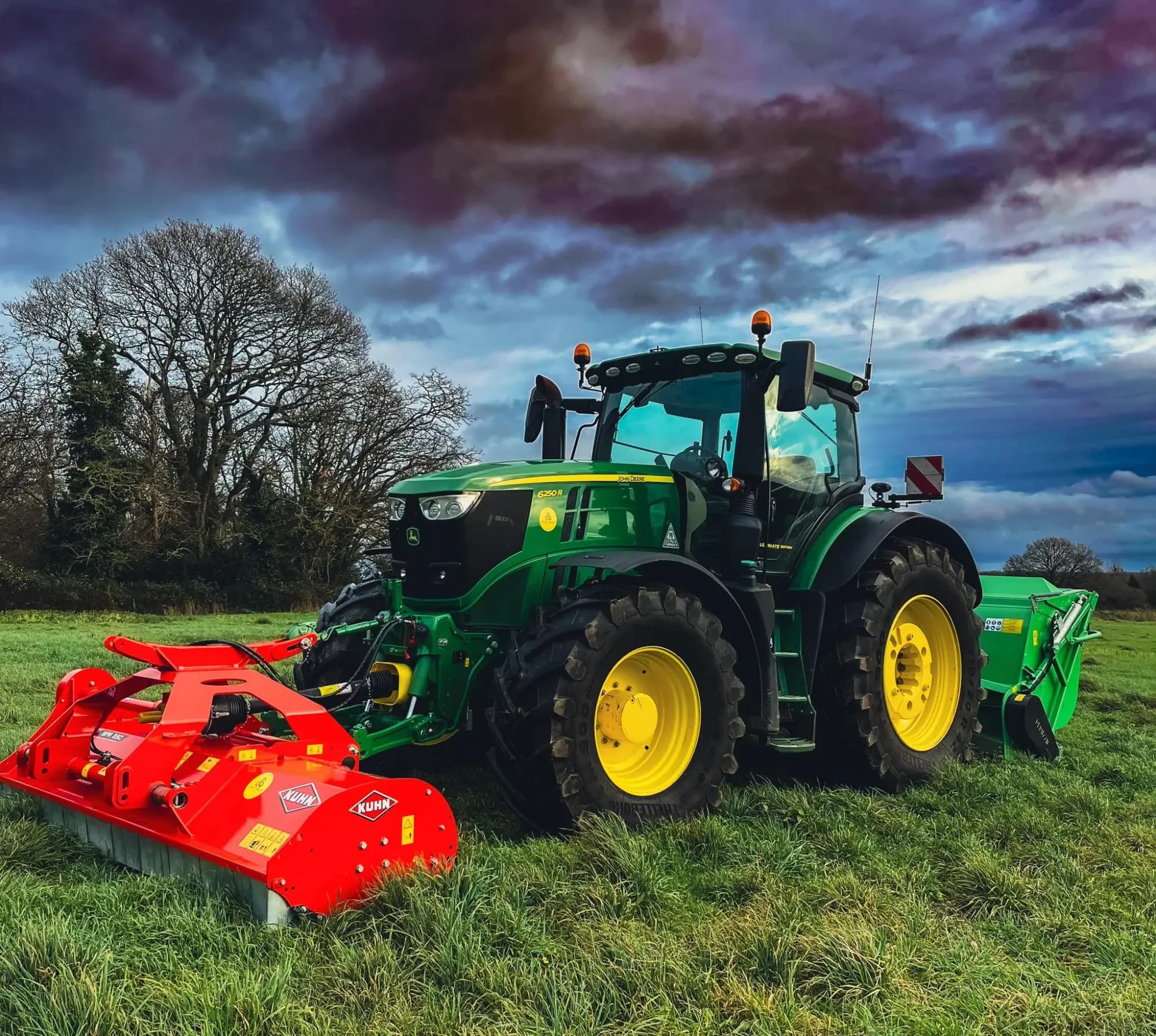
September is the pivot month for a paddock. The grass is still growing but it's slowing, the ground is still dry enough to carry a tractor, and the birds are out of the hedges. Get the right jobs done in the next six weeks and your field goes into winter in good order. Miss the window and you'll spend until March looking at the consequences.
Here's the list I'd work through, roughly in order.
One last cut
If the paddock hasn't been topped since midsummer, it wants one more cut before growth stops. Topping now knocks out the stalky, seeded-out grass the horses have been walking past all summer and gives the sward a chance to thicken up at the base before the cold arrives.
Don't scalp it. Going into winter you want to leave more leaf than you would in May — around 7–10cm is a sensible height for a final cut. Grass overwintered too short gets poached to mud the first wet week of December; grass left long collapses into a mat that smothers itself. The middle is where you want to be.
If the field got away from you entirely this year and it's more standing hay than pasture, that's a flailing job rather than a topping job — a flail will chew through the thick stuff and mulch it down fine enough to rot away rather than lying in rows.
Hedge season opens
From 1 September you can cut hedges again — the bird-nesting season that runs from March through August is over. There's a reason the good hedge contractors are booked solid from the first week: everyone's hedges have had six months of growth, and everyone wants them done before the ground gets soft.
One cut a year, done now-ish, keeps most field hedges civilised. If yours have been left for a few seasons and they're pushing out into the field or over a lane, expect the first cut back to look brutal — it always does, and the hedge always recovers.
The last call for ragwort
Ragwort is easy to spot in flower and much harder once it dies back, so this is the last sensible window to deal with it. Pulling works on small numbers if you get the root; spraying works on a real infestation but takes the field out of grazing while the plants die off — and dying ragwort is more dangerous to horses than living ragwort, because they'll actually eat it. Whatever you do, don't top a field full of ragwort and leave the cuttings lying. That's the worst of every option.
Docks and thistles are also still worth hitting in early autumn while they're moving sugar down into their roots — a September spray travels further down the plant than a June one.
Feed the ground, not the problem
Autumn is the overseeding window. The soil is still warm, the rain is (usually) arriving, and new grass seed gets six gentle weeks to establish before winter shuts everything down. If your paddock has bare patches, poached gateways from last winter, or a sward that's more weed than grass, September beats April for fixing it — spring-sown seed has to fight established weeds for light; autumn-sown seed mostly doesn't.
The usual sequence is: harrow hard to rip out the dead thatch and open the surface, broadcast seed, then roll to get seed-to-soil contact. On a small paddock a contractor will do all three in a single visit.
Look at your gateways now
Every winter-wrecked gateway was visible in September. If the entrance to the field is already compacted and bare, it will be a foot deep in mud by Christmas. Moving the feeding area, putting down a load of stone, or just hanging the gate at the other end of the field — all of it is cheap and easy now and miserable or impossible in January. Walk the field once with winter eyes and you'll see exactly where the problems are going to be.
Book people while the ground is good
The practical point behind all of this: field work runs on ground conditions, and ground conditions have a deadline. Contractors can top, flail, cut hedges and overseed comfortably right up until the fields go soft — and then everything stops, usually some time in November, and doesn't properly start again until spring.
So the queue works the way you'd expect. The people who ask in early September get their jobs done in good conditions. The people who ask in late October are hoping for a dry week. If you know the field needs something before winter, now is the time to get it in front of someone.